
The Idle Mafia Game economy guide breaks down how cash, stamina, and energy interact across every shift so you can stack income without burning out your resources. Cash in this 2D idle crime simulator flows from active jobs, passive properties, and a few stacking bonuses, but the engine under the hood rewards players who plan their energy and stamina use around the cap rather than spamming whatever pays the most per tap. The official Idle Mafia Game page on Roblox reports roughly 3.27 million visits and an 88.7% like rating as of September 2026, which means the early-game economy has been tested by a very large crowd and the patterns below are confirmed by community data, not theory.
Reading the Idle Mafia Game Economy: Cash, Stamina, and Energy
The three currencies in this Roblox idle/tycoon hybrid behave like a closed loop, and understanding the loop is the whole point of an economy guide. Jobs drain energy to produce cash and XP, XP raises your level, levels raise your energy and stamina caps, and the same cash you earn unlocks properties that pay you back passively while you are offline. Every choice in the system is a tradeoff between spending energy now for active cash versus banking cash for a property that pays you later.
How Cash Enters Your Wallet
Active cash comes from running jobs, which are gated by energy. Passive cash comes from properties, which you purchase once and then collect from on a timer. There is also a small but consistent boost from the Group Bonus (about +10% to passive property income for joining the Stacks of Cash developer group) and the Like Bonus for favoriting the game on Roblox. Code drops add a one-time spike: the only code confirmed active in September 2026 is capo (worth $10,000), distributed through the official Idle Mafia Game Discord.
How Stamina and Energy Differ
Energy fuels jobs and refills slowly over real time. Stamina, on the other hand, governs your crew's performance in combat and boss fights, and it drains based on actions taken by your henchmen. According to community testing summarized in the RobloBliss video on max energy, the energy system regenerates at a slow steady rate, which means the smartest play is pacing jobs around your cap instead of burning energy below the threshold where regen cannot keep up.
| Currency | What It Powers | How It Refills | Common Mistake |
|---|---|---|---|
| Cash | Job payments, property purchases, upgrades | Earned from jobs, passive from properties | Spending every dollar on a new job instead of a property |
| Energy | Running jobs and most active actions | Slow real-time regen, expanded by level-ups | Spamming the cheapest job and stalling XP gains |
| Stamina | Henchman actions in combat and boss fights | Regen over time, expanded by skill points and gear | Overcommitting to long boss attempts with no stamina buffer |
Why the Loop Tilts Toward Level-Ups First
A lot of new players assume the goal is to reach the highest-paying job as fast as possible, but the actual bottleneck is your energy cap. Each level expands that cap, which means more jobs per real-time window, which means more cash per session, which means faster property purchases, which means more passive income. Skipping the first set of low-paying jobs to chase a flashy late-game option almost always slows the loop down because you are leveling too slowly to keep your energy cap above your play rate.
Idle Mafia Game Fast Cash Guide: Build a Bankroll Without Burning Out
The fast cash playbook is not about clicking faster; it is about sequencing upgrades so each dollar spent produces a higher return than the last. This is the heart of the idle mafia game fast cash guide approach, and it mirrors the early-game advice collected in the generist tips video, where players consistently recommend stacking passive income before chasing bigger one-time payouts.
Step 1: Clear the First Three Jobs and Bank the Cash
The earliest jobs are designed to be cheap to run and fast to clear, which means they level you up at a rate that no late-game job can match. Run them in sequence rather than mixing, and resist the urge to spend your first $1,000 on anything other than the cheapest available property. Holding the line here is what separates players who snowball by hour two from players who are still grinding the same starter job an hour later.
Step 2: Buy the Cheapest Property Available
Once you have enough cash for a property, the math flips: every job you run after that point is paying for upgrades that compound on top of passive income you are already collecting. The cheapest property is the right first buy even if a more expensive property looks tempting, because the cheaper option pays for itself faster and frees up cash for a second property sooner.
Step 3: Stack Bonuses Before Going Big
Two small actions add up to a noticeable bump. Joining the Stacks of Cash Roblox group gives the Group Bonus of roughly +10% to passive property income, and favoriting the game grants the Like Bonus. Both are free, both are permanent, and the community reports they are easy to forget in the rush of a new save. Redeeming the capo code ($10,000) before buying your first property is the cleanest way to front-load your bankroll.
Step 4: Reinvest the First Property's Payback
Treat the first property as a tool, not a trophy. When it has paid back its purchase cost, pour the surplus into the next property tier or into upgrades that raise your per-job cash. The goal is to keep your average cash-per-minute climbing every 15 to 20 minutes, not to max out any single income source.
| Step | Action | Cash Range | Why It Matters |
|---|---|---|---|
| 1 | Run the first three jobs in order | $0 → ~$500 | Builds XP and raises your energy cap |
| 2 | Buy the cheapest property | ~$500 | Starts passive income before you go deep on jobs |
| 3 | Redeem the capo code and join the group | +$10,000 +10% passive | Free bankroll boost and a permanent income modifier |
| 4 | Reinvest property payback | Variable | Compounds your cash-per-minute curve |
Idle Mafia Game Cash Stacking Guide: How to Compound Income
Cash stacking is the practice of layering income sources so that each one pays for the next before the previous one has finished paying for itself. It is the backbone of the idle mafia game cash stacking guide philosophy and the difference between a save that grows linearly and one that grows exponentially. Three systems are worth stacking in the first few hours: properties, the Group Bonus, and job-specific cash multipliers tied to level-ups.
Stack 1: Properties Tiered by Payback Speed
Not all properties are created equal. Some pay a high absolute amount but take a long time to pay for themselves, while others pay a smaller amount but recycle cash much faster. For stacking purposes, faster payback is almost always the better early-game choice because the recycled cash accelerates your next purchase. The table below summarizes how to think about property tiers in the first few hours of a save.
| Property Tier | Typical Payback Window | Best Use |
|---|---|---|
| Cheap starter | Under 30 minutes | First buy; recycles cash fast |
| Mid tier | 30 minutes to 2 hours | Second or third buy; balances absolute payout and recycle speed |
| Expensive late tier | 2+ hours | Late game when your job income is already high |
Stack 2: The Group Bonus and Like Bonus Together
The Group Bonus (about +10% to passive property income) and the Like Bonus look small in isolation, but they are multiplicative on top of every property you own. If you have three properties paying $100 per cycle each, the Group Bonus alone turns that into roughly $330 per cycle, and the Like Bonus stacks on top. Players who delay these bonuses until late game leave a lot of free income on the table during the period when they need it most.
Stack 3: Job Multipliers From Level-Ups
Each level usually raises your per-job cash by a small percentage, which means the same job pays more after every level-up. This is why the early-game recommendation to clear the first jobs in sequence is not just about XP; it is also about unlocking a higher per-job cash floor before you start grinding the mid tier. The same job that pays $50 at level 5 may pay $70 at level 12, and that 40% lift is permanent.
Idle Mafia Game Stamina Management Guide: Keep Your Crew Fighting
Stamina is the resource your henchmen spend when they act in combat or boss fights, and it is the most common silent killer of progression runs. The idle mafia game stamina management guide approach is to treat stamina the same way you treat energy: pace actions around the cap, never let the bar hit zero mid-fight, and spend skill points on stamina-related upgrades before dumping points into raw damage.
Stamina Versus Energy: A Common Source of Confusion
Energy and stamina are two separate bars and they are not interchangeable. Energy drives your active job income; stamina drives your crew's performance in fights. Boss guides like the stamina management breakdown walk through how spending stamina at the wrong moment can lock you out of a kill, which is why a clean stamina plan matters more than a slightly higher damage number.
Stamina Regen and Skill Point Allocation
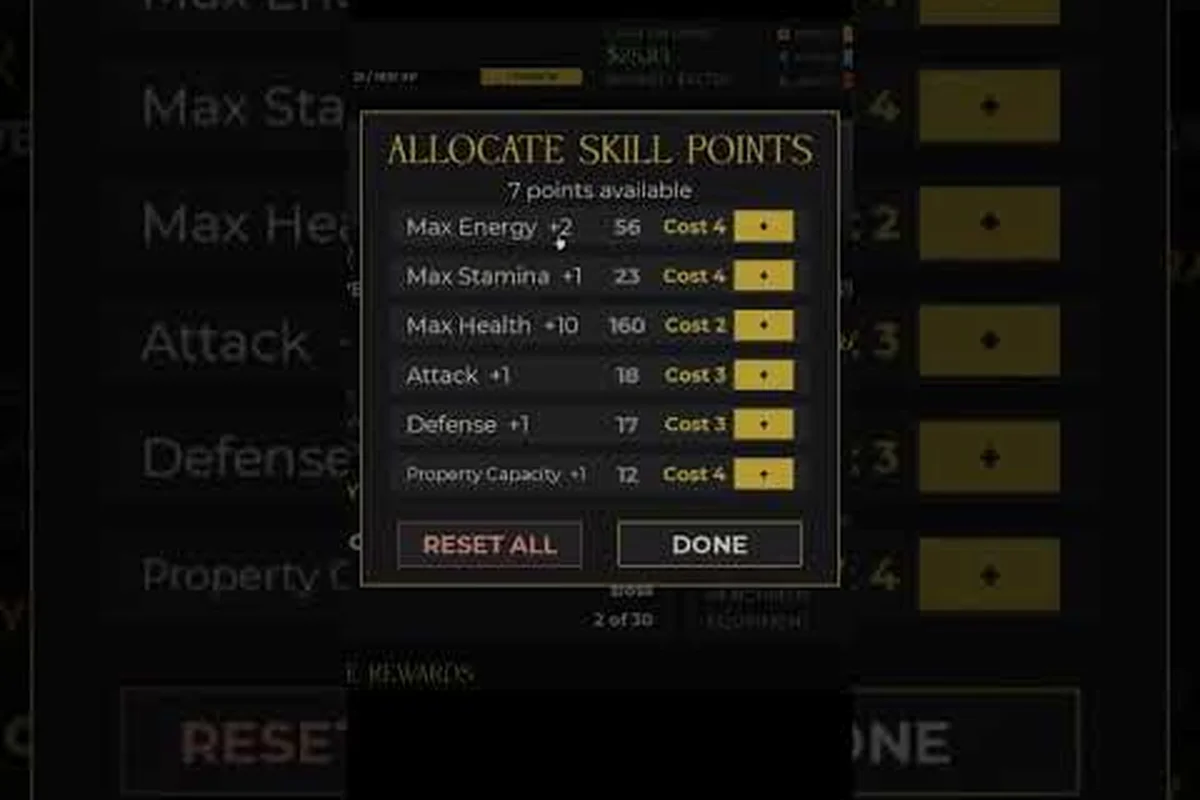
Stamina regenerates over real time, but the regen rate is slower than most players expect. Community data suggests the best use of early skill points is to raise your max stamina and your stamina regen, not your raw attack. A larger stamina pool lets you absorb longer boss phases without retreating, and a faster regen rate lets you re-enter a fight sooner. Both directly raise the number of boss attempts you can complete per real-time hour, which is the real progression metric for the mid game.
| Stamina Lever | Effect | Priority |
|---|---|---|
| Max Stamina | Larger bar, more actions per attempt | High — invest early |
| Stamina Regen | Faster refill between attempts | High — pairs with Max Stamina |
| Attack Power | Higher per-hit damage | Medium — raise after stamina is stable |
| Defense/Health | Longer survival in enrage phases | Medium — situational |
When to Walk Away From a Boss Fight
Boss attempts that start with low stamina almost always end in failure, and every failed attempt costs you a stamina cycle you could have used on a more favorable setup. The standard community heuristic is to start a boss fight only when your stamina bar is at 80% or higher, and to retreat if the boss enters enrage while you are below 40%. Burning a bar to learn the attack pattern is fine once, but repeating that mistake is what burns out mid-game runs.
Idle Mafia Game Energy Management Guide: Pace Jobs Around the Cap
Energy is the resource that runs the entire active side of the economy, and managing it well is the single biggest lever in the idle mafia game energy management guide. The system rewards players who let their energy cap dictate the rhythm of their play session rather than the other way around.
Let the Cap, Not the Spree, Drive Your Session
Each level raises your energy cap by a small amount, and the regen rate is fixed. That means there is an upper limit to how many jobs you can run per real-time hour, no matter how fast you click. Players who accept that limit and pace their job runs around the cap consistently outperform players who burn energy in a burst and then sit at zero for 20 minutes waiting for the bar to refill. The RobloBliss walkthrough on max energy in Idle Mafia Game demonstrates exactly this principle: pacing jobs around the cap produces more cash per session than spamming whatever job is cheapest.
Spend Skill Points on Max Energy First
Just like stamina, energy responds well to early skill point investment. A larger energy cap means more jobs per session, which means more cash and more XP, which means faster level-ups, which means an even larger energy cap. The cycle is self-reinforcing, and it is one of the cleanest examples of compounding in the game. Hold off on cosmetic or low-impact skill nodes until your energy cap and energy regen are both at a comfortable level.
The Cap-Spamming Anti-Pattern
A common failure mode is to spam the cheapest job as fast as possible to drain the energy bar. This produces a short burst of cash but leaves you with nothing to do while the bar refills, and the XP gain from the cheapest job is usually the lowest in the game. The right move is the opposite: pick a job that costs the bulk of your energy bar (so you spend it in one clean run) and that pays a competitive per-energy rate. You can confirm which jobs fit that profile with the Idle Mafia Game jobs guide, which catalogs each job's energy cost, cash reward, and XP reward.
| Energy Lever | Effect | Recommended Timing |
|---|---|---|
| Max Energy | More jobs per session | Spend skill points here first |
| Energy Regen | Faster refill between bursts | Second priority |
| Per-Job Energy Cost | Bigger hits per job | Choose jobs that match your cap, not the cheapest one |
| XP per Energy Spent | Faster level curve | Picks up naturally as you clear the first few jobs |
Pair Energy Plan With a Job Plan
The energy plan and the job plan are the same plan, viewed from two angles. If you know which job you are grinding, you know how much energy it costs, and that tells you how many runs per session your cap supports. Players who are serious about mid-game progression tend to set a per-session job count (for example, "6 runs of the mid tier per 20-minute window") and then refuse to deviate. That kind of discipline is what the level 25 to 50 jobs route is designed around.
Putting the Three Systems Together
The economy only works when stamina, energy, and cash are managed in the same plan, because each one feeds the others. A clean session routine looks like this: start at full energy, clear the first jobs in sequence, bank enough cash for a property, redeem the capo code and join the Stacks of Cash group, then pour the next several hours of property payback into a second property while pacing stamina around any boss attempts you want to fit in. Crew management becomes the next layer once your income is stable, and the crew slot guide covers how to expand your henchman roster without destabilizing the income plan you just built.
The single biggest mistake players report is treating the three systems as separate games. Energy without a job plan produces a flat cash curve. Stamina without an energy plan produces a boss attempt you cannot afford to finish. Cash without a stacking plan produces a save that plateaus within a few hours. When all three are pointed at the same compounding loop, the economy takes care of itself, and the idle side of the game does most of the work while you are offline.
Frequently Asked Questions
What is the fastest way to earn cash in Idle Mafia Game early on?
The fastest way to earn cash in the first hour is to clear the first three jobs in sequence, redeem the capo code for $10,000, and then buy the cheapest property so passive income starts compounding. Job-only grinding is slower because your energy cap limits how many runs you can do per real-time window, while a property pays you back while you are away from the keyboard.
Should I spend skill points on attack or stamina first?
Spend skill points on max stamina and stamina regen first, because they raise the number of boss attempts you can complete per real-time hour, which is the real progression metric in the mid game. Attack power matters, but a slightly higher damage number does not help if you run out of stamina halfway through a boss attempt and have to retreat.
How do the Group Bonus and Like Bonus stack together?
The Group Bonus adds roughly +10% to passive property income and the Like Bonus is a separate permanent boost granted for favoriting the game. They are multiplicative on top of every property you own, so the sooner you claim both, the sooner every property you buy starts paying more per cycle.
Is it better to spam the cheapest job or pace jobs around the energy cap?
Pacing jobs around the energy cap is consistently better because the cheapest job usually pays the lowest XP, which means slower level-ups and a slower-growing energy cap. Spending the bulk of your bar on a single mid-tier job produces more cash per session, more XP per session, and a higher cap for the next session.
How many properties should I own before going after boss content?
Community testing suggests at least two properties should be paying you back before you start committing stamina to boss attempts, because failed attempts cost you stamina cycles and a stable passive income keeps your cash curve growing even when you are losing fights. The exact number depends on your play schedule, but the principle is the same: stabilize income before you start spending stamina on uncertain outcomes.